
The Bear Spirit
RECHARGING • SOLITUDE / INNER RETREAT • POWER
The Bear Spirit
You've chosen the Bear, not for its roar, but for its rhythm. This is a spirit of deep rest, inner retreat, and grounded strength. The Bear does not rush. It does not apologise for pausing. The Bear knows that true power is not always loud — sometimes it sleeps, heals, or waits. And when it rises, it moves with purpose, presence, and protection.
If you're drawn to this symbol, it may be time to slow down — not because you're failing, but because you're ready. Ready to honour your need for solitude, to listen to your body's wisdom, and to reclaim the quiet power that lives within you. You don't have to be "on" all the time. In fact, your greatest strength may be revealed only when you allow yourself to rest.
This is your invitation: to nest, to heal, to remember your power — not as domination, but as presence. Not as noise, but as stillness. Not as perfection, but as truth.
Welcome to the cave. You belong here.
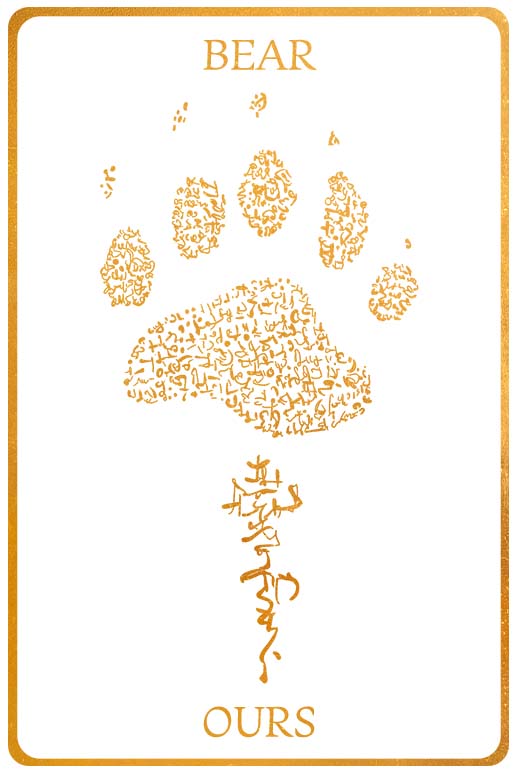
Table of Contents
Before You Dive Into The Messages from the
Brear Spirit
I suggest you first look at the message's title that resonated the most with you and read its message. Then you can explore the others, but maybe this one is the only message you needed today.
RECHARGING • SOLITUDE / INNER RETREAT • POWER
I create the space to recharge and regenerate.
During the winter, I find shelter to take care of myself or to bring my cubs into the world.
It is a time of nesting during which I sleep a lot and give my body time to heal and regenerate for the coming season.
I'm not afraid to miss out on what is happening outside of my cave, as there is already plenty happening within me, and I know that this break will allow me to appreciate life even more once I've recharged my energy.
If you have picked me, it might be a good time to press pause, even for just a day, and to get some rest to recharge your batteries.
Remember, for new ideas to come, for insight to rise from your inner wisdom, you need to create space.
I do not fear solitude.
While I enjoy my family and appreciate being able to share moments with others, I also like spending time on my own.
Solitude gives me an opportunity to be present to my environment and to integrate my experiences.
Revel in the opportunities you have to be present to yourself without getting distracted by the needs of others.
Do not fear being alone and use this time to nurture your relationship with yourself.
I forgive myself for not always seeing the extent of my power.
My body and size are powerful. I can become aggressive when my cubs are in danger or when I need to defend myself. But at my core, I am not a violent being.
However, I don't always remember the power of my roar, the size of my paws, or the strength of my muscles, and as a result, I can unintentionally hurt others when I feel threatened or even when I just want to play.
Your inner work is to be aware of your power; to use it when it serves you, while knowing the impact and consequences of its full force, so as not to hurt others unnecessarily.
The Bear in Greek Mythology
The Bear Among the Stars: the tale of Callisto
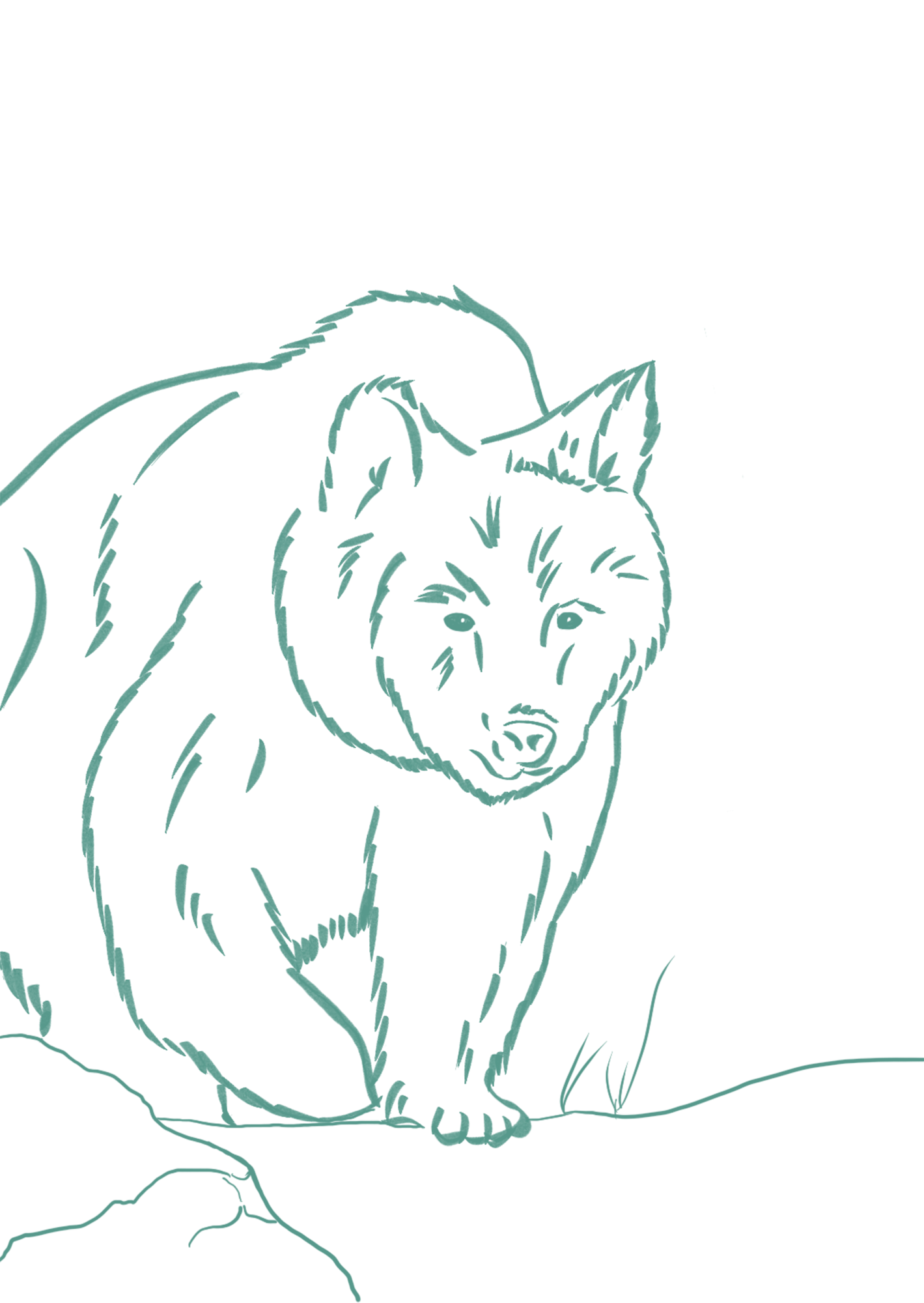
Let's dive into the story of Callisto and her metamorphosis into the Great Bear constellation.
The first mention of Callisto appears in the Catalogue of Women, also known as the Ehoiai (Ēoîai), a long epic poem said to have been written by Hesiod around 700 BCE. The poem — which survives today only in papyrus fragments — is a chronicle of the genealogical tree of Greek mythical heroes, traced through the women who bore them.
The women of the poem were mortal or semi-divine heroines who lay with the gods, willingly or by force, and bore the most mythical heroes of Greek mythology.
Greek aristocratic families traced their own lineage back to these mythic heroes, so the poem functioned as "a map of the Hellenic world in genealogical terms," retracing a whole system of kinship, alliance and hierarchy that held real political weight long after it was written.
The second apparition of Callisto is around 8 CE, in the Latin literature written by Ovid. The gods have taken Roman names (Zeus becoming Jupiter and Artemis becoming Diana) and only Callisto keeps her own; but from heroine, she becomes a victim.
In this tale, Jupiter rapes her, and his wife Juno (Hera in Greek myth) decides to punish her for becoming pregnant and for bearing, in her body, the proof of Jupiter's crime. The punishment is a metamorphosis: at Juno's urging, Diana transforms Callisto into a bear. Stripped of her human form, she flees the wild beasts she once hunted, forgetting she has become one. She watches her baby boy, Arcas, from afar. When Arcas turns fifteen, he finds himself pointing a lethal spear at his mother-bear's chest, ignorant both of his parentage and of her transformation. Jupiter, perhaps stirred by a little remorse, intervenes to prevent the killing, raising them both into the sky as constellations, the Great Bear and the Little Bear.
There are versions in which it is Artemis herself who transforms Callisto into a bear, to shield her from Zeus and from Hera's jealous rage.
And perhaps that is the quiet heart of the myth. Callisto does not choose her transformation. She is reshaped by forces larger than herself; by desire, by jealousy, by a world that will not let her be freely herself. And yet she is not erased. From the loss of her human form, she is given the sky.
The Bear reminds us that we are sometimes changed against our will, and that even then, we can reach the stars.
You do not have to understand the transformation to honour it. Sometimes the cave, the stillness, the long retreat, is not where you disappear. It is where you reignite your flame and recalibrate with your inner star.
You Might Enjoy Reading

Black: Embracing the Void and Transformation – A Chapter in Your Secret Conversation with Colour
Discover why black appears when you need to heal. Explore its invitation to sit with grief, find strength in the void, and prepare for profound transformation.