
Why You Feel Disconnected:
A Simple Guide to Grounding for Empaths
In a world that constantly demands our mental attention, it is easy to drift away from our physical selves.
You might notice yourself moving through your day on autopilot, feeling detached, or suddenly overwhelmed by emotions that don’t seem entirely your own.
This sense of disconnection is often a signal that your energy has scattered, leaving you unanchored.
Grounding is the gentle art of returning home to yourself, but knowing when and why you need it is the first step to reclaiming your stability.
What Makes You Feel You Need Grounding?
Do you sense this need internally, or did someone suggest it, leaving you wondering how to achieve it?
First, let’s explore how you feel. Sometimes, emotional swirls can mimic the need to ground, but they are not the same.
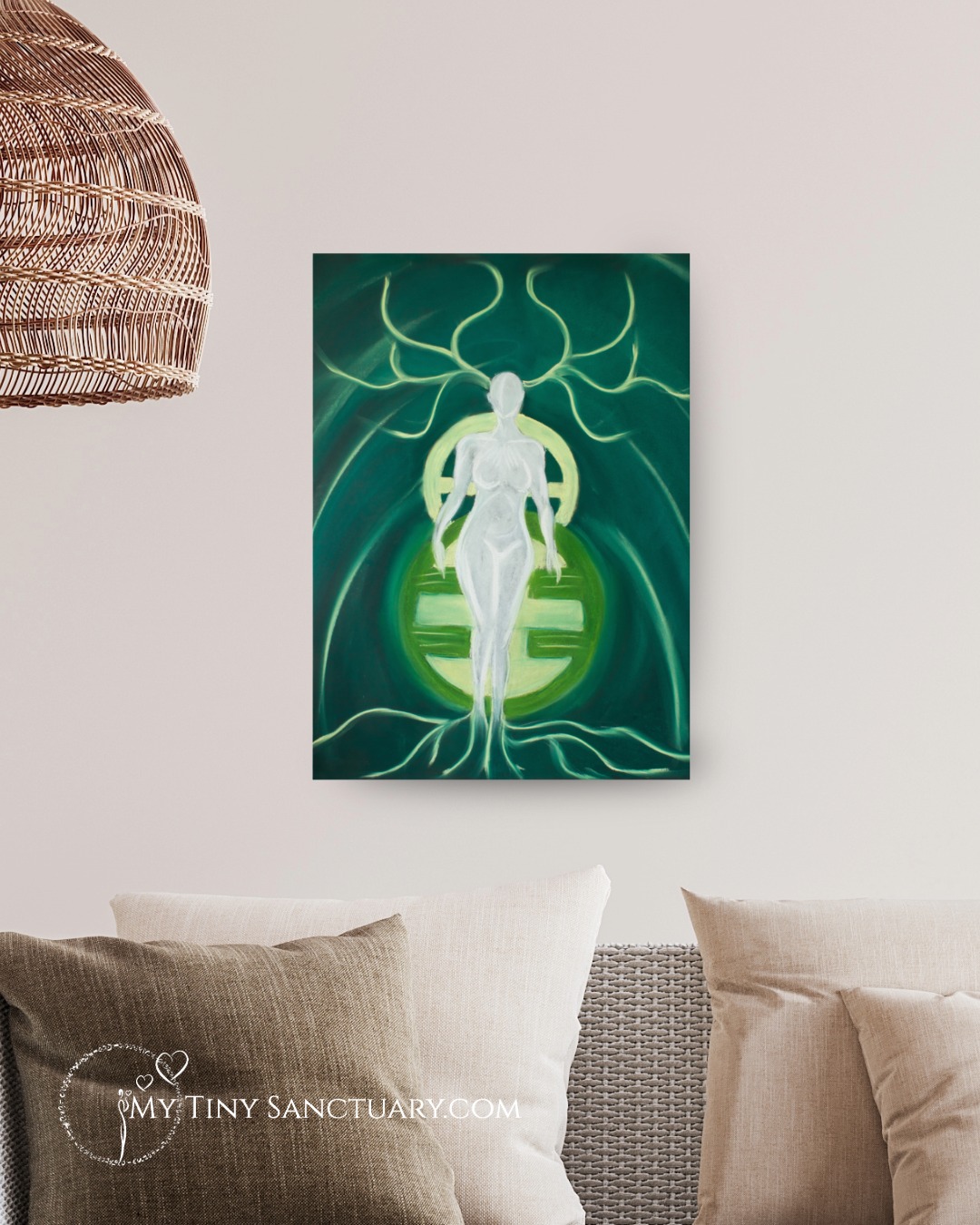
I need grounding when:
- I don’t feel present; it’s as if part of me is here on the ground while another part is floating away.
- I can’t recall what I just did.
- I bump into things, as if I am not fully aware of my body in space.
- I feel stuck in my head, over-thinking or dwelling on fears and doubts.
I am more likely to need to feel, express, or explore my emotions when:
- My mind is rehearsing a situation or relationship.
- I feel anxious about a relationship (with a colleague, partner, child, family member, or friend).
- I feel anxious about what I have said or done (feeling “not enough”, shame, or anger).
In both situations, you will need to ground, but the why will differ.
A need for grounding might be the sign to remember to be present to your life, your intuition, and your body.
A need to ground to cope with your emotion is a call for expression, healing and an invitation to get to know you better so that whatever your emotion is, it does not eat you up.
OM Chakra Notebook – Joy Compass Journal | A5 Notebooks for Meditation and Alignment
22,54 €
But What Is Grounding, Actually?
Many meditations invite you to imagine a string connecting you to the core of the Earth. That remains fairly visual and abstract and I must admit that I didn't know what it really meant when I started meditation. Today, I can define grounding as being fully present inside your body and occupying its entire physical and energetical mass (regardless of your size).
This implies accepting your feelings and activating your senses.
For some, it means accepting presence in an earthly existence rather than chasing the blissful state of meditation. For others, it means learning not to dissociate when something unpleasant happens, whether emotionally or physically. And for others, it might mean finding safety in the physical realm after years of living primarily in the abstract or intellectual world.
Ultimately, grounding is about owning your physical incarnation on Earth: your body.
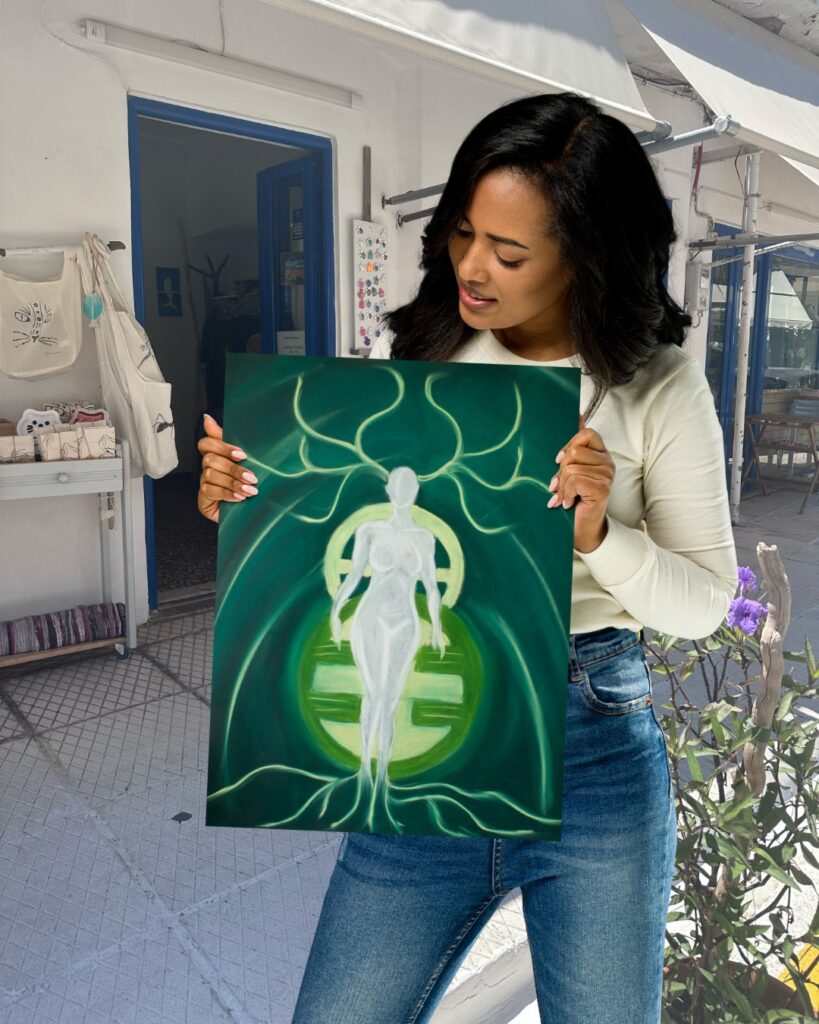
The Anchored Women – Embodiment Art Poster | Intuitive Chalk Illustration on Body Wisdom
Price range: 31,95 € through 36,95 €
Your Body Is More Than a Shell
It took me a long time to grasp the difference between visualising being in my body and actually feeling that I was in my body. There were several reasons for this. I was taught that emotions were dangerous to express and feel because their expression was a source of humiliation or shaming. I felt too much and often absorbed others’ pain and emotions within me; therefore, it seemed better not to be in my body.
Others’ energy and moods were boiling inside me as if I were a sponge cleaning the world around me, so I stayed in my head to shelter from the pain it caused. In a nutshell, I am sensitive and an empath, and it was far more comfortable not to be in my body. But by doing so, I was also missing out on the full potential of my body. If you feel as I did, even a little, then you are missing out on your body’s wonders too.
Your body, when you finally feel safe enough to inhabit it, becomes:
A communication tower, allowing you to emit and receive information. It does so not only through your vision, hearing, and voice but also by grasping subtle information from energy fields, emotional fields, touch, and smell. What you see goes beyond what you imagine, as your brain processes micro-information at an unimaginable speed.
By receiving and emitting a wealth of information, you can navigate life with more ease, provided you understand that you are not responsible for taking care of all the information you get. You don’t have to feel everything. Once this distinction is made, your intuition becomes fully active, your senses ensure your safety (if you listen to them), and you will find it easier to see people for who they truly are (if you trust yourself).
While the empath or sensitive person in you might fear feeling more, the game here is actually to heal the part of you that thought feeling was “too much”. This implies learning to set healthy boundaries with others and, most importantly, with yourself. It is about healing your saviour complex and your tendency to think you must carry the world’s pain for others. It is about learning what belongs to you and what does not.
It is about placing yourself on an equal level with others, allowing yourself to have needs, and taking care of yourself at least as much as you take care of others. It is about growing your self-trust so that when your senses and intuition inform you, you respect their guidance rather than doubting yourself. It is about releasing guilt, shame, and over-responsibility so that feeling stops being a source of stress.
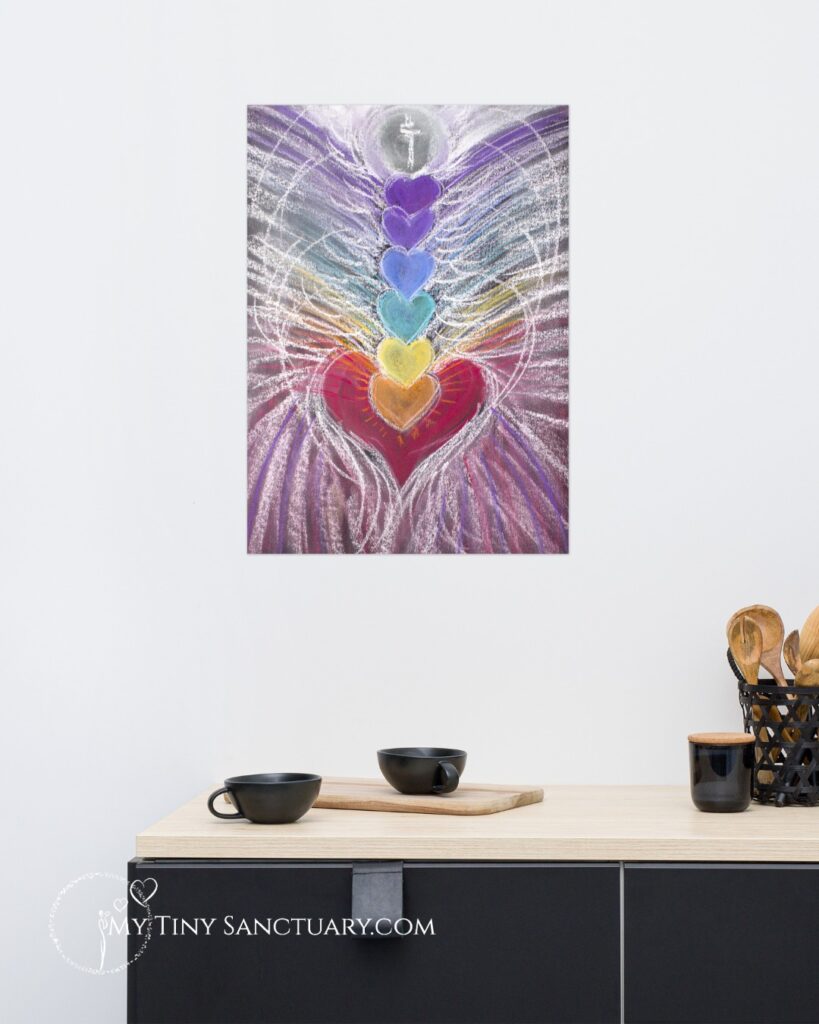
Follow your Heartbeats – Heart-Centred Chakra Poster | Art Print for Energetic Harmony
Price range: 36,94 € through 41,94 €
Start Today: Follow Your Heartbeat to Ground
I started this practice out of necessity to stop my mind from spinning with issues, stress, or emotional baggage that prevented me from sleeping. But I soon discovered it had more value than I ever imagined.
So, do you want to know the practice first or the value? Let’s do both.
When you try to feel your heartbeat throughout your entire body, you will:
- Realise that it can be playful to be inside your body—feeling a toe, then trying to feel both, then your ear, your knee, exploring all the places you can feel your heartbeat. Trying to feel several places at once becomes a fun game.
- Realise that when you focus on your heartbeat, you cannot think; your entire mind is focused on observation.
- Feel your energy start to regulate after a time.
- Feel your skin and muscles relax.
- Fall asleep more easily.
- Spot where your physical tensions are and how your stress could impact your health.
- Find yourself, even if it is just the shy version of you at first.
My favourite time to practice heart awareness is when I am in bed, because I usually fall asleep right in the middle of it or shortly after. The places you don’t want to practice this are while driving or doing anything that requires your full attention for safety reasons (walking in the street, cooking, etc.).
How does it work? Very simply:
- Put your hand on your heart, in the middle of your chest.
- Feel your heartbeat.
- After a while, pay attention to your scalp until you sense your heartbeat there.
- Then try with your neck, your shoulders, the tips of your hands, your belly, your knees, and the tips of your toes.
Explore your heartbeat in different areas of your body for just one minute to feel how it feels. The more you practice, the longer you can stay present with yourself.
In the morning, note what was different. Did you sleep better? Were your dreams more vivid? Were you able to drop that discussion that was looping in your head? Anything else? After a week of practice, take the time to observe what feels different and what has changed for you. Do the same after two weeks, then three, then a month. Keep observing.
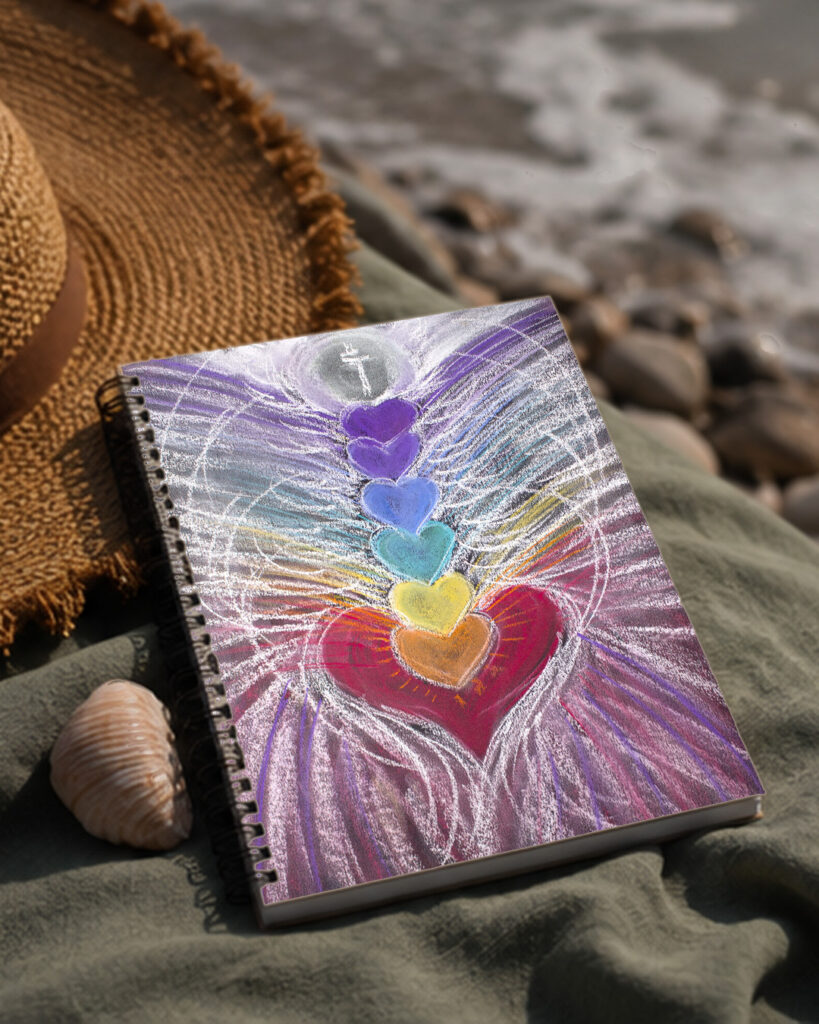
Follow your Heartbeats Notebook – Heart-Centred Journal | Art Print Cover for Intuitive Writing
22,54 €
A Journey, Not a Destination
The heartbeat practice is just one doorway into the vast house of your body. While it is a powerful tool to start with, grounding is not a one-size-fits-all solution; it is a personal exploration.
There are countless other ways to anchor yourself, from breathwork and movement to working with tangible objects that serve as physical reminders of your presence.
In the future, I will share more of these practices with you. For those who feel at ease with meditation, I have even created specific necklaces designed to support this journey. I have also written about how to use malas (prayer beads) as a tactile method to ground your energy and focus your mind.
For now, simply begin where you are. Whether it is feeling your heartbeat in your toes or simply noticing the weight of your feet on the floor, every moment of presence counts.
Be patient with yourself as you relearn the art of inhabiting your own skin. T
he more you practice, the more natural it will feel to be here, fully alive, and completely grounded.
Other Articles You Might Enjoy About Grounding
Grounding with Mala Beads: 7 Steps to Reconnect with Your Body
Discover how to use a mala for grounding with this simple 7-step practice. Learn to reconnect with your body, calm your mind, and find presence today.