A Reflexion on Beliefs, Fears, and Heart-Centred Wishes
You know that feeling when someone compliments your new business, your child’s bright smile, or even just your lucky day, and you instinctively knock on wood or make a little spitting sound to make sure it keeps going well?
In Greece, that instinct has a name: Kako Mati, the Evil Eye. For thousands of years, the belief has been that jealousy or even too much admiration, whether meant kindly or not, can send a kind of negative energy our way.
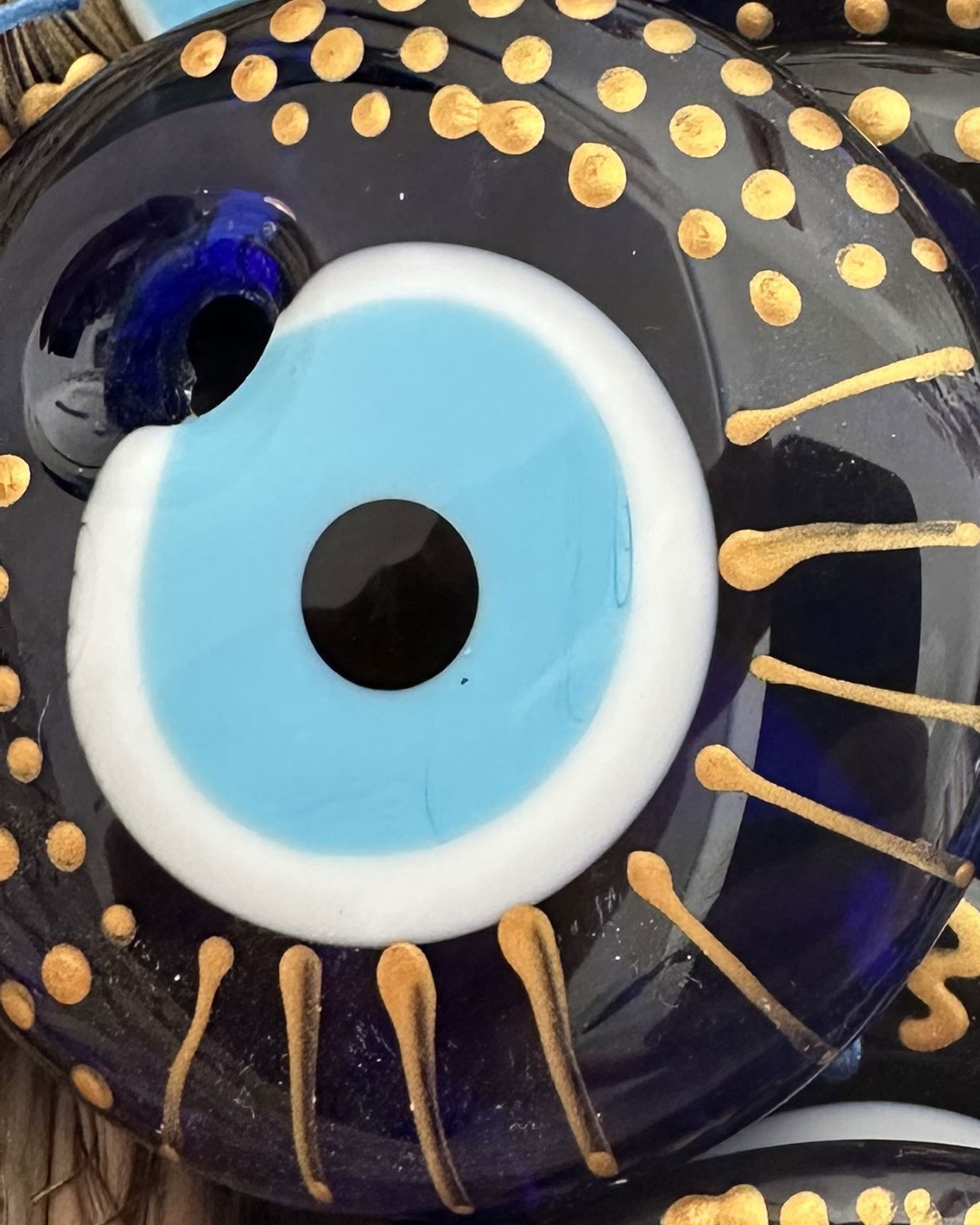
That’s why friends and family gift the Mati, that beautiful blue eye charm, to act as a shield and keep us safe.
Now, if you ask a skeptic, they might call this old-school superstition.
And they’re not entirely wrong about the label, but I think they might be missing the deeper point.
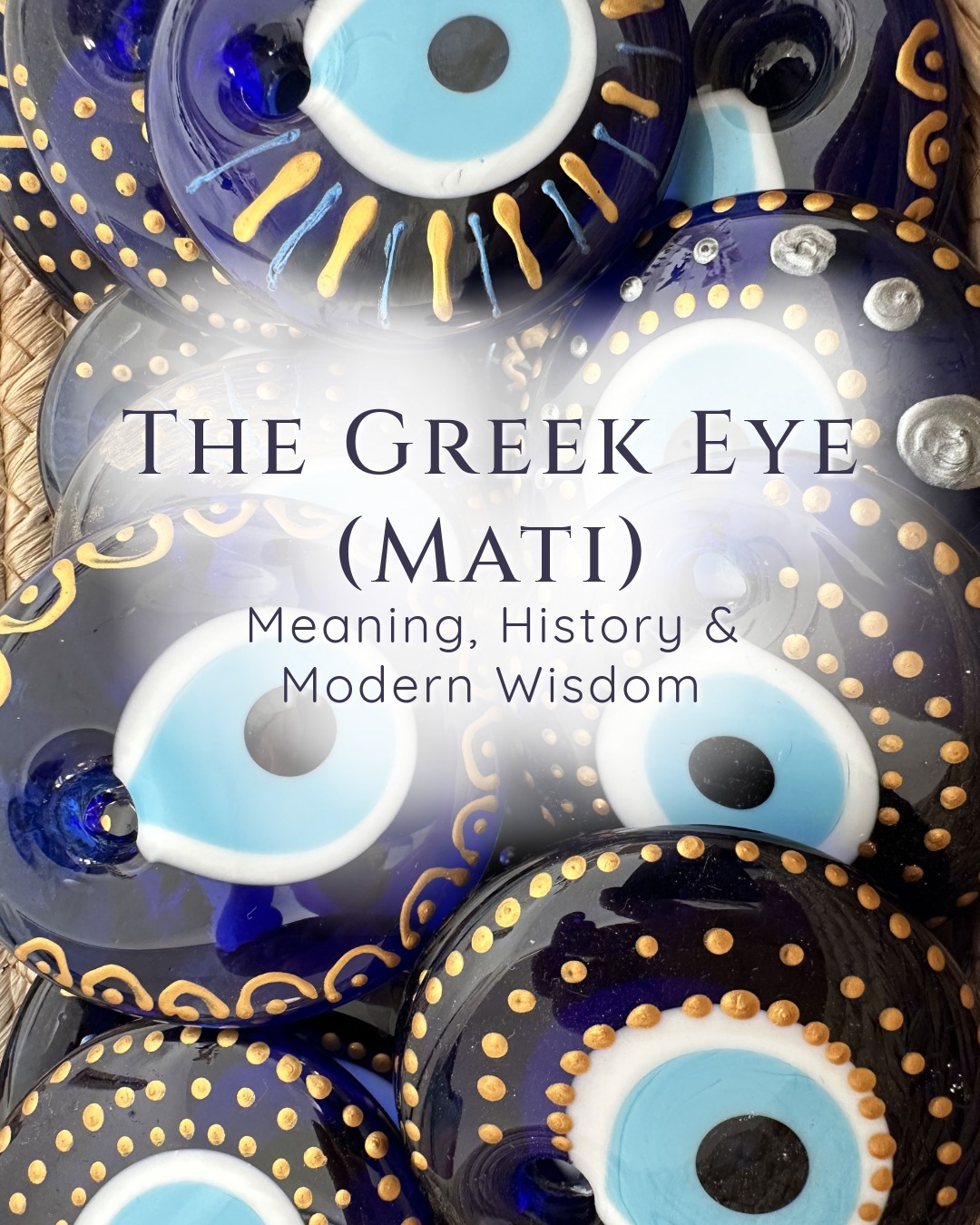
While ancient folklore often treated the Evil Eye like a real, invisible arrow that could strike anyone, there’s a fascinating psychological truth hidden underneath. Think about it: the "curse" often feels most powerful when we’re actually afraid of it. It’s a bit like the nocebo effect; the opposite of a placebo.
If you truly believe you’re vulnerable, your mind starts scanning for trouble, and suddenly, every little setback feels like proof that the curse is real. In a way, fear opens the door. The Mati, then, isn’t just a magical charm; it’s a gentle reminder to your own heart that you are protected. It helps you close that door on anxiety so you can walk through your day feeling secure.
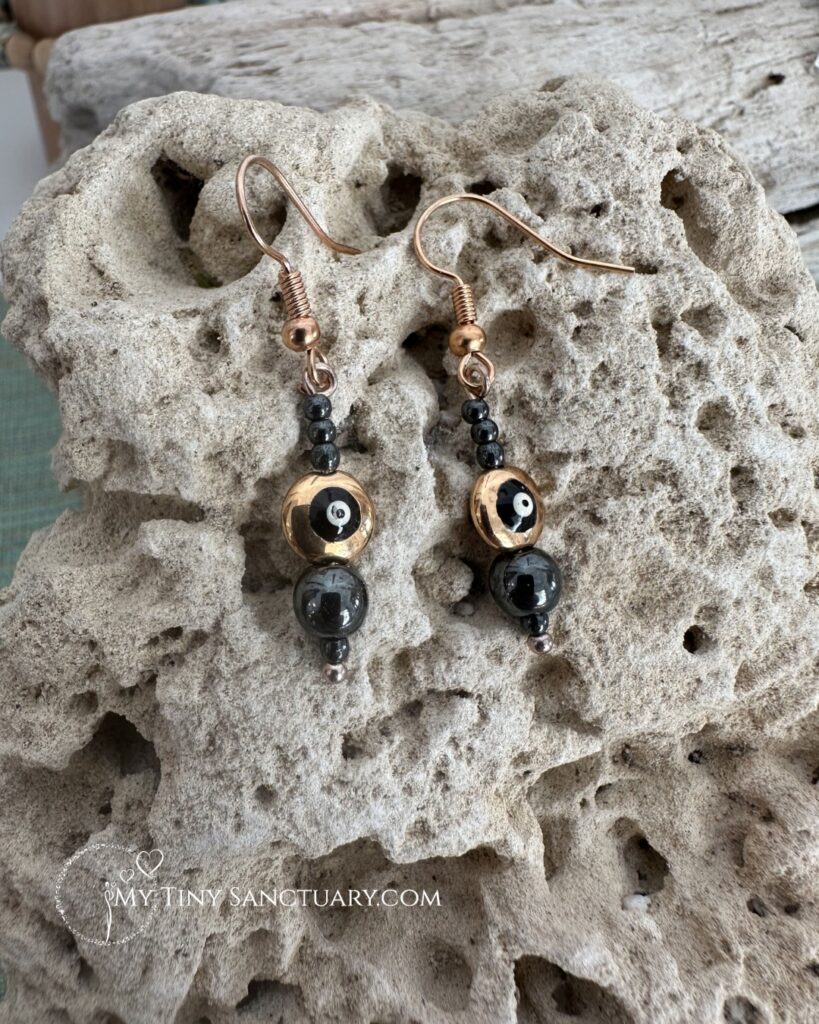
Rose Gold & Hematite Mati Earrings Wear your moral compass with quiet elegance.
15,00 €
Why Did Beauty Feel Like a Burden?
This fear isn’t unique to Greece; you’ll find versions of it all around the Mediterranean and the Near East. But here, it’s woven right into the stories and history of the land.
If you dive into Greek mythology, you’ll see a pattern: standing out often came with a price. Think of Medusa, whose beauty led to a terrible fate, or Narcissus, who got lost in his own reflection. These weren’t just scary stories; they were cultural warnings about the dangers of vanity and the heavy weight of being watched.
But beyond the myths, there was real, tangible danger. For centuries, as empires rose and fell, pirates sailed the Aegean, and soldiers marched through the islands, being beautiful, wealthy, or powerful could make you a target. It wasn’t just about envy; it was about survival.
There are even accounts, like those found in the Library of Apollodorus, suggesting that families would sometimes dress their young boys as girls to hide them from conquerors looking for slaves or soldiers. In those times, the Mati became a spiritual version of that disguise, a way to deflect the "gaze" when you couldn’t physically hide.
The Ancient Science of the Gaze
It’s funny to think about, but some of the greatest minds of antiquity took this very seriously. Plutarch, the famous moralist from the 1st century, actually wrote essays trying to explain how the Evil Eye worked.
He theorised that our eyes weren’t just cameras taking pictures; they were emitters, shooting out energy. If that energy was charged with envy, he believed it could literally poison the air around someone, especially children, who were thought to be more sensitive.
This belief shaped how people talked to each other, and honestly, it still does.
Today, if you compliment a baby in Greece, the parents might quickly say "ftou ftou ftou" (mimicking a spit) or "sto mati" ("to the eye"). It’s a little verbal ritual to wipe away any potential bad luck before it sticks.
The blue glass eye of the Mati acts as a decoy. The idea is that it catches that jealous glance first, taking the hit so you don’t have to.
From Fear to a Hug in Jewelry Form
Here is where the story gets warmer. While the roots of the Mati are definitely in survival and fear, over the last thousand years, it has blossomed into something much softer: an expression of love.
These days, you rarely see someone wearing a Mati because they’re terrified of a neighbor’s jealousy. Instead, it’s a gift of philoxenia; that beautiful Greek word for friendliness to strangers. It’s what you give a friend when they move into a new home, start a new business, or welcome a baby.
When you hand someone a Mati, you aren’t saying, "Watch out, people hate you." You’re saying, "I wish you health, abundance, and protection. I’ve got your back."
Even the color matters.
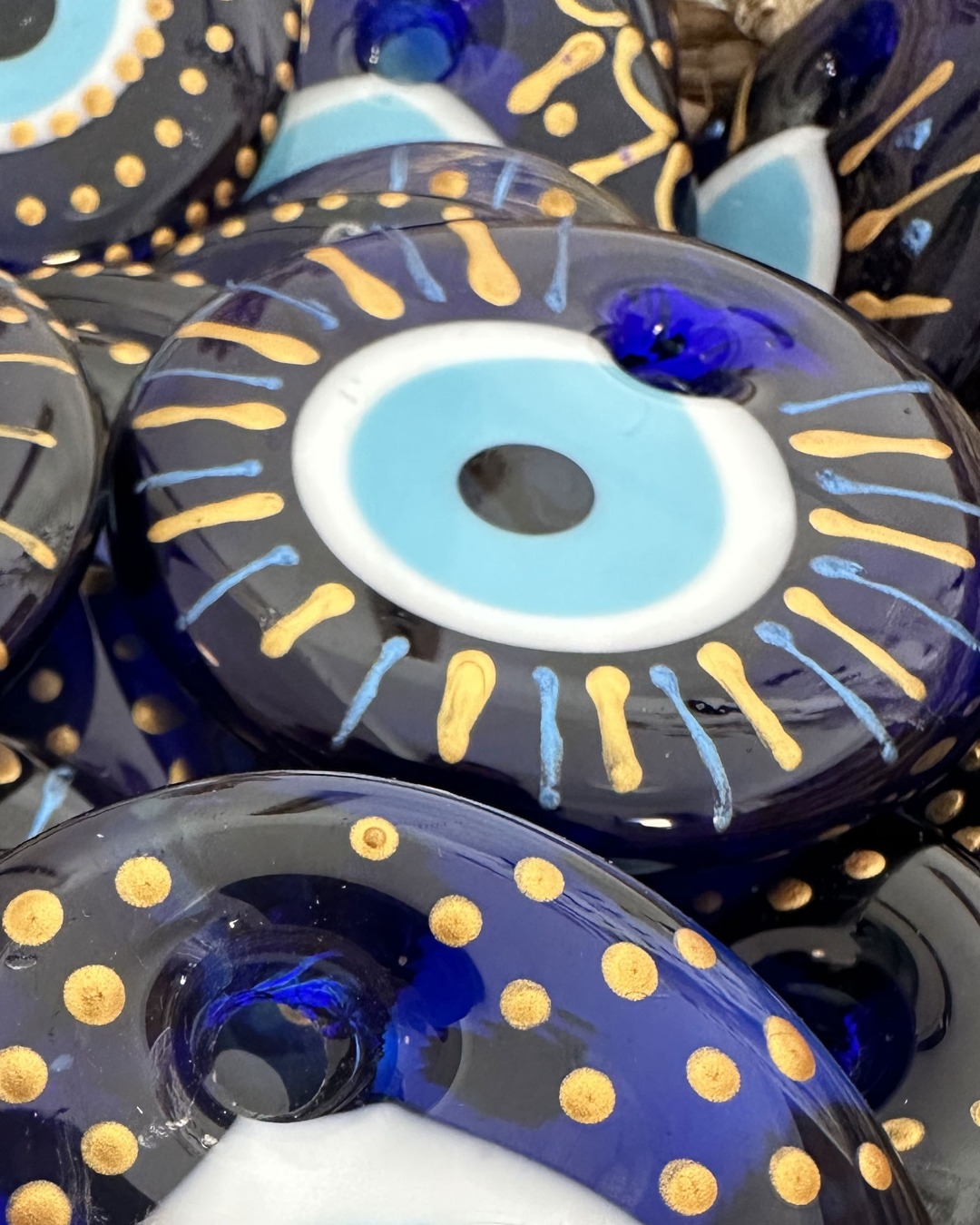
That deep cobalt blue? In Byzantine and Ottoman times, it was seen as a spiritual color, one that the human eye couldn’t naturally make. Because it was "unnatural," people believed it could confuse bad spirits, acting as a trickster to keep you safe.
Flipping the Script: What If the Eye Looks Back?
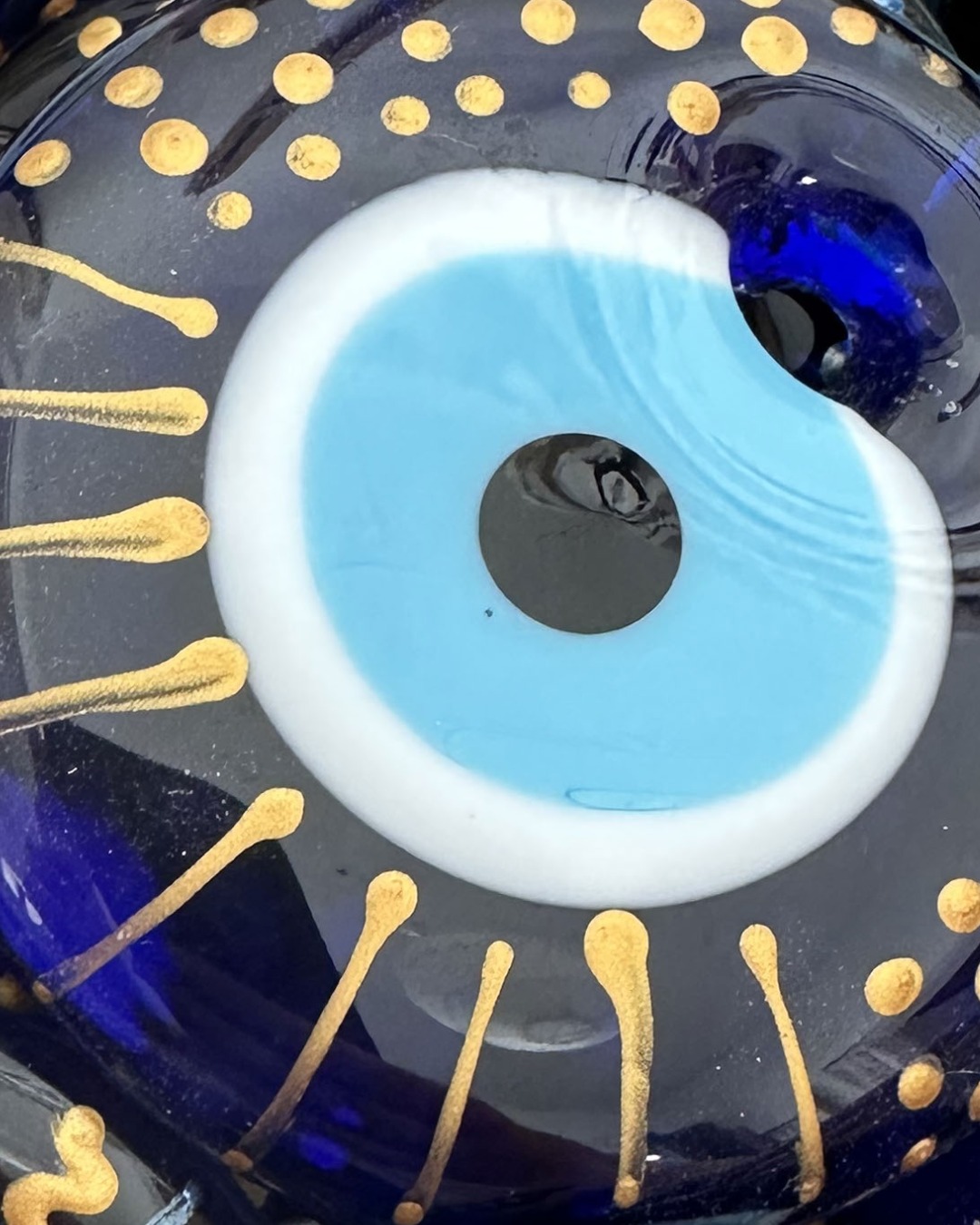
I love this tradition, but I also love to play with its meaning. What if we flipped the perspective? Instead of just being a shield against other people’s bad vibes, what if the Mati is actually a mirror for us?
Imagine the talisman not as a deflector, but as a reflector.
- For the person looking with envy: When they glance at the Mati, maybe they catch a glimpse of their own reflection in that blue glass. It’s a quiet prompt to check their own heart.
- For you, the wearer: Having that eye on your jewelry is a gentle reminder that you are visible, too. It watches back.
When you look at it this way, the old fears turn into beautiful life lessons:
- Beauty can lead to vanity, so the Mati whispers: Stay humble.
- Prosperity can lead to greed, so the Eye reminds you: Stay generous and share your abundance.
- Jealousy hurts everyone, so let it inspire compassion instead.
- Power can isolate, so let it urge you toward community and support.
A Modern Talisman for Your Journey
Whether you’re drawn to a rustic, hand-painted ceramic eye or a sleek, gold-set gemstone Mati, the symbol carries a quiet power. It connects us to our ancestors, who navigated a world of gods and conquerors, but it also speaks to us today, in a world of social media and complex relationships.
Wearing the Mati doesn’t mean you’re hiding from the world. It’s a conscious choice to carry a reminder of our shared humanity. It’s an invitation to check in with your own intentions and to walk through your day with a heart centered on protection, not just for yourself, but for everyone you meet.
In that sense, the Mati Eye is more than just a pretty piece of jewelry for your collection; it’s a little moral compass, right there on your chest, guiding you back to what matters.